The Practical Guide to Coil Bound Booklets for Business Printing
Why Coil Bound Booklets Still Matter for Professional Printing
I have spent years working with print buyers in Lancaster and across Pennsylvania, and one thing that has stayed consistent is the demand for booklets that lay flat, stay open, and survive repeated handling. Coil bound booklets, also called spiral bound booklets, have become my go-to recommendation for clients who need a polished finish without the fuss of other binding methods. The plastic coil, which winds through rectangular holes punched along the spine, lets the pages rotate a full 360 degrees. That means a training manual can be folded back on itself, a marketing brochure can sit open on a desk, and an event program can be thumbed through without the spine cracking.
What separates a coil bound booklet from a saddle stitched or perfect bound one is the combination of durability and flexibility. Saddle stitching works well for thin booklets under twenty pages, but once you add cardstock covers and heavyweight paper, the staples start to pull. Perfect binding gives a square spine that looks great on a shelf, but it does not let the booklet lie flat when opened. Wire binding and comb binding each have their own advantages, but the coil is the one that feels most natural in hand. The coil itself is usually made from a strong, flexible plastic that resists kinking, and the ends are crimped so the coil does not slip out. I have seen coil bound booklets survive being tossed into a briefcase, taken to a trade show, and passed around a conference room without losing a single page.
Choosing the Right Binding for Your Project
The first question I ask every client is how the booklet will be used. If it is a short-run printing job for an internal training manual that will be updated quarterly, coil binding is often the best value. The pages can be added or removed by simply unthreading the coil, which is something you cannot do with perfect binding or saddle stitching. If the booklet is a portfolio presentation meant to impress a potential client, the coil gives a clean, professional look that says you paid attention to detail. And if you are printing an event program for a conference, coil bound booklets stay open to the correct page without constant holding, which is a small thing that makes a big difference for attendees.
Paper and Cover Options
The feel of a coil bound booklet depends heavily on the materials you choose. For the interior pages, I usually recommend a 70 lb or 80 lb text weight with a smooth finish for full-color printing. The coil binding process requires a bleed margin of at least one-eighth inch on all sides, so plan your design files accordingly. For the covers, cardstock covers in a 100 lb cover weight give the booklet a sturdy backbone. If you want extra protection, laminated covers or a UV coating can prevent scuffs and fingerprints, which is especially useful for marketing brochures that will be handled by many people. A matte laminate gives a soft, sophisticated feel, while a gloss laminate makes colors pop. I have had clients in Lancaster ask for both, and the choice really comes down to the brand image you want to project.
Page Count and Thickness
Coil binding can handle a wide range of page counts. I have produced booklets as thin as ten pages and as thick as three hundred pages using the same method. The coil diameter just needs to match the thickness of the spine. For a typical training manual of forty to sixty pages, a standard coil works fine. For a thicker corporate identity guide or a comprehensive portfolio presentation, a larger diameter coil is needed to allow the pages to turn freely. This flexibility makes coil bound booklets a strong candidate for projects that might grow in scope over time.
Practical Considerations for Lancaster Printing Clients
If you are ordering booklets from a Lancaster printing service, there are a few things to keep in mind. Local printers often have more flexibility with short-run printing and print-on-demand services than large national chains. That means you can order exactly the quantity you need, whether it is fifty copies for a team meeting or five hundred for a regional event. The turnaround is usually faster too, because the printer can adjust the schedule without waiting for a centralized production queue. I have seen clients save money and time by working with a local printer who understands coil binding and can advise on paper selection, cover finish, and binding style based on the specific use case.
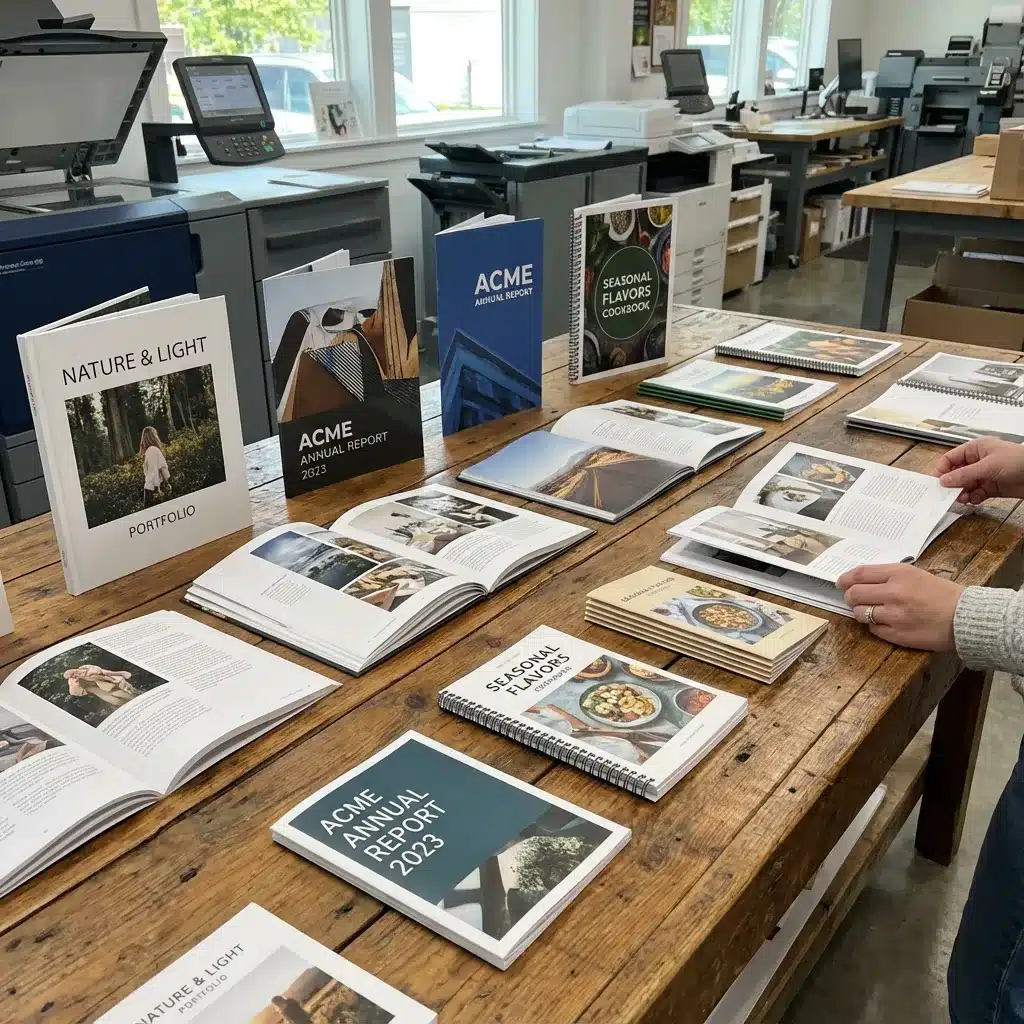
Another advantage of local printing is the ability to see and feel a sample before committing to a full run. When you are choosing between wire binding and coil binding, or between a laminated cover and a UV coated cover, having a physical sample in your hand removes all the guesswork. A good printer will have a range of samples showing different paper weights, finishes, and binding methods. I always tell clients to ask for a sample of a coil bound booklet with cardstock covers and heavyweight paper interior pages, because that combination is the most common and the most telling.
Common Pitfalls and How to Avoid Them
One mistake I see often is underestimating the importance of bleed margins. If your design extends to the edge of the page, you need at least one-eighth inch of extra image area beyond the trim line. Without it, a slight shift during cutting can leave a thin white line at the edge of the cover. Another issue is choosing a binding method that does not match the page count. Saddle stitching works for booklets up to about twenty-four pages, but beyond that the pages start to creep and the staples may not hold. Perfect binding is great for thicker books but does not allow the booklet to lie flat. Coil binding hits the sweet spot for most business documents, especially when you need the booklet to stay open on a desk or be passed around a room.

Paper grain is another factor that matters more than most people realize. For coil bound booklets, the paper grain should run parallel to the spine so the pages turn easily and the booklet does not fight against the binding. If the grain runs perpendicular, the pages will be stiff and the booklet will tend to close on its own. A good printer will ask about grain direction and set up the job accordingly. It is one of those details that separates a professional result from an amateur one.
Real-World Examples of Coil Bound Booklets
I have worked with a local nonprofit that produces a thirty-page annual report every year. They switched from wire binding to coil binding because the wire would sometimes bend out of shape during shipping, and the coil is much more resilient. The report includes full-color photos of their programs, a financial summary, and a message from the board. The coil binding lets the report lie flat on a table during board meetings, and the laminated covers keep the front and back pristine even after being handled by dozens of donors.
Another client runs a small design studio and creates portfolio presentations for freelance photographers. They use coil bound booklets with heavyweight paper interior pages and a matte laminate on the cover. The binding allows each spread to open completely flat, which is important when you are showing full-bleed images that span two pages. The client orders in print-on-demand batches of twenty or thirty at a time, adding new work as the portfolio grows. The coil binding makes it easy to swap out old pages and add new ones without rebinding the entire booklet.
For a Lancaster-based company that produces training manuals for their field technicians, coil bound booklets have been the standard for years. The manuals are printed in short runs, updated quarterly, and carried in toolboxes where they get exposed to dirt, moisture, and rough handling. The coil binding holds up better than comb binding, which can crack in cold weather, and better than perfect binding, which can split along the spine. The company prints on a 100 lb text weight with cardstock covers and a UV coating for extra durability. They have tried other methods, but they keep coming back to coil because it works.

Final Thoughts on Coil Bound Booklets
If you are planning a booklet project and want something that feels substantial, stays open, and can be updated easily, coil bound booklets are worth serious consideration. The binding method has been around for decades for a reason. It works for event programs, training manuals, marketing brochures, portfolio presentations, and any other document that needs to be handled, read, and referenced repeatedly. The combination of plastic coil, cardstock covers, and heavyweight paper gives you a product that looks professional and performs well under real-world conditions.
When you work with a local printer in Pennsylvania printing, you get the benefit of someone who can walk you through the options and help you avoid the common mistakes. Ask to see samples. Talk about paper grain, bleed margins, and cover finishes. And if your project calls for a booklet that can lie flat, turn easily, and last through many readings, coil binding is probably the right choice.